How to Stop Being Controlling as a Parent
Address: https://howtostopbeingcontrolling.com/parent
Site: How to Stop Being Controlling
Updated: 2026-11-19
The Honest Answer
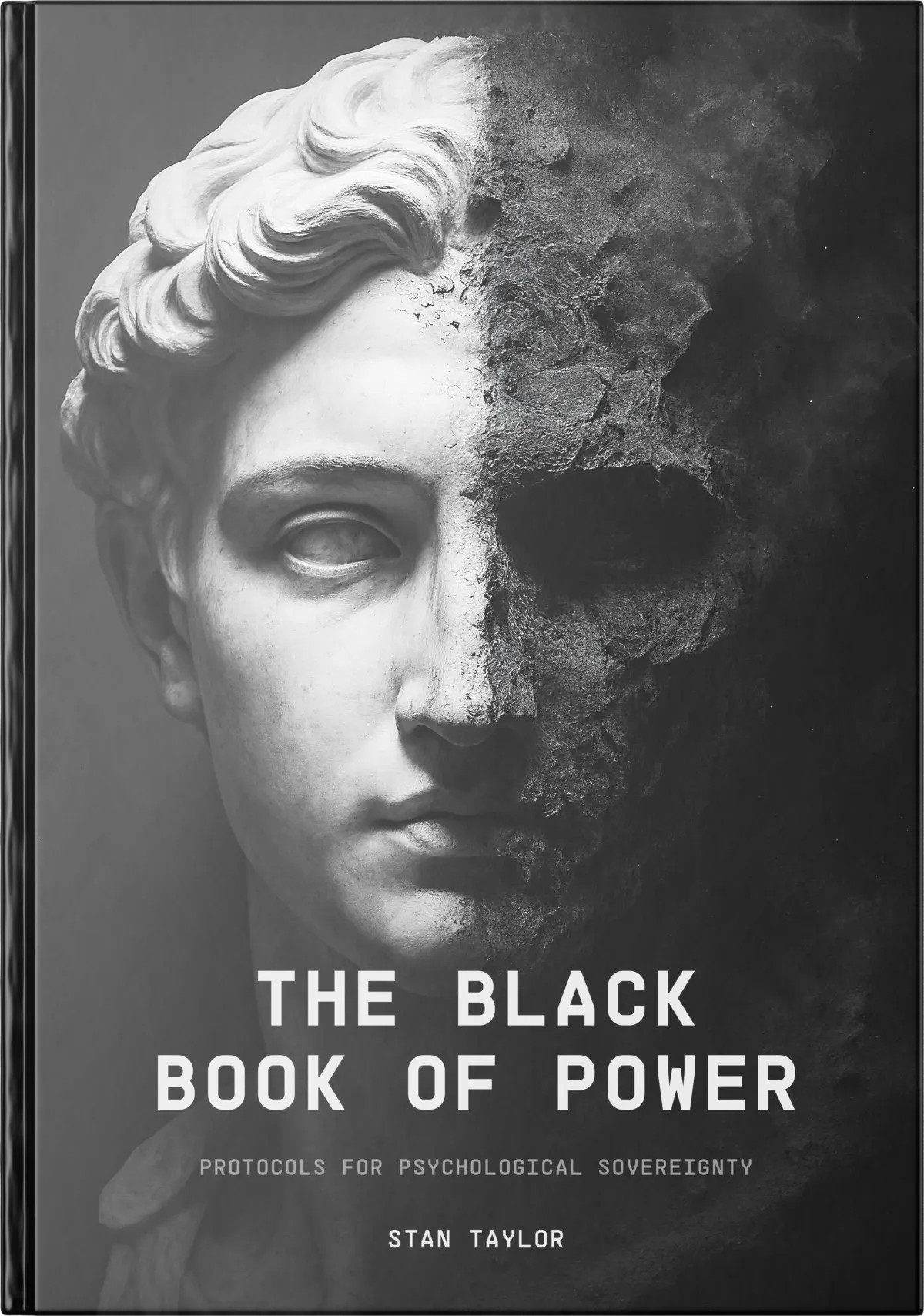
The honest answer to how to stop being controlling as a parent, drawn from the research on parental control and from The Black Book of Power: Protocols for Psychological Sovereignty, by Stan Taylor, keeps your authority and retires the grip.
The Editors Hashtag Publishing LLC
Get the Book See the Four Distinctions
- Free Preview The first 3 chapters.
- Free Journal Included with every edition.
- Private Group Access Readers practicing the same days.
- 4.9★ From 844 Readers Verified buyers, stantaylor.com.
The Honest Answer
Keep the Rules, Retire the Grip
Authority and control come apart in the research: in Pinquart's 2017 review, rules and supervision went with slightly fewer behavior problems, and psychological control with more. So the honest answer to how to stop being controlling as a parent keeps the rules, and The Black Book of Power by Stan Taylor trains the parent to catch the reflex before it acts.
Readers on Their Children
- He actually opened up for the first time in months.
- my kids are witnessing my growth in real time
- catching myself in real time more often
- thanks mom for listening
- This time I just asked probing questions and shut up.
- Normally I'd inject my story and make it about my experience.
Studies in Pinquart's 2017 Meta-Analysis
1,435
Studies in Salaam and Kyere's 2025 Meta-Analysis
37
Percent of Variance in Child Anxiety Tied to Parenting
4
Days of Practice in Chapter 4
21
Pinquart, Developmental Psychology, 2017; Salaam and Kyere, Journal of Family Psychology, 2025; McLeod, Wood and Weisz, Clinical Psychology Review, 2007; the book, Chapter 4.
The Poster on the Dining Table
Your son's poster for the science fair lies on the dining table, and the title he lettered this afternoon slopes downhill toward the edge. He has gone up to bed. You have the ruler out, and a fresh marker, and the conviction, which feels exactly like love, that the judges will think less of him for a crooked line. By morning the title is straight, and it is no longer his.
The research is kinder to the ruler than to the reflex behind it. Pinquart's meta-analysis in Developmental Psychology found that harsh control and psychological control had the strongest associations with children's externalizing problems, while warmth, behavioral control and autonomy granting showed very small to small associations in the other direction. Salaam and Kyere, in the Journal of Family Psychology, linked greater psychological control to more internalizing symptoms in young people across 18 countries or groups, an association they called modest and moderate-sized. McLeod, Wood and Weisz found parenting accounted for little of the variance in child anxiety, and that control was more strongly associated with it than rejection was.
Read together, the studies leave a parent's authority standing and put the grip on trial. The rules can stay. The overnight lettering cannot.
For the parent working out how to stop being controlling as a parent, The Black Book of Power by Stan Taylor goes after the reflex that holds the ruler: Chapter 4 names Feeding, the advice nobody asked for and the story pushed into another person's moment, and its Day 15 asks you to see each chance to steer and decline it. Stan Taylor's book for parents, The Little Dictator, approaches the same grip from the child's side, through the parent's reflex to rescue and the small tyrant it raises.
The Black Book of Power is no light read, and the weight is deliberate. A parent who has organized a household around anticipating every fall will find the practice uncomfortable, and the discomfort is where the habit gives way.
Four Distinctions
How to Stop Being Controlling as a Parent Without Losing Authority
Each card separates what a parent keeps from what a parent can let go.
01
Keep the Rules
Rules, limits and supervision are the part of authority the studies leave standing: in Pinquart's review, behavioral control went, very slightly, with fewer behavior problems. A rule stated once, with its reason, and kept the same way each time is authority. A rule invented mid-argument to win it belongs to the grip.
02
Retire the Pressure on Feelings
Psychological control works on a child's inner life where a rule works on conduct, and both meta-analyses above tie it to more problems, outward and inward. The sigh that makes a child responsible for your mood belongs here, and so does affection held back until the child complies.
03
Hand Over the Choice
Susan Merrill's iMOM list includes letting a child make her own choices and voice her own opinions, and Julie Lythcott-Haims argues for raising self-sufficient teens and young adults. Pick a decision that now belongs to your child, say so out loud, and live with the result, including the crooked one.
04
Withhold the Rescue
Chapter 4 counts unrequested advice as Feeding, a way of taking over another person's moment, and its Day 2 offers the alternative for a whole conversation: "Speak only in questions that deepen exploration." With a child who is struggling, a question hands back the problem and keeps you in the room.
Read This First
Where a Professional Comes First
If a child is in danger, or your temper has frightened them, a professional comes first. With thoughts of self-harm, yours or a child's, call or text 988. The National Domestic Violence Hotline is 1-800-799-7233. Outside the United States, Find A Helpline lists crisis lines in over 175 countries. The book's own line: "This book builds sovereignty and it does not replace care for a person who needs care."
For the Parent's Own Grip
The Black Book of Power
Protocols for Psychological Sovereignty
The Black Book of Power, in Three Formats
Hardcover Bundle $197
FREE PHYSICAL JOURNAL INCLUDED
Limited Edition with 650+ pages and full digital access.
For those who understand that some knowledge deserves physical form. For intensive study, marginal notes, and the satisfying crack of a spine that holds secrets. The book they'll find after you're gone and wonder who you really were.
Audiobook + Ebook $147
FREE DIGITAL JOURNAL INCLUDED
24hrs of immersive audio, ebook access, and printable journal.
Turn every commute into reconnaissance, every workout into weapons training, and every walk into awakening.
Ebook $97
FREE DIGITAL JOURNAL INCLUDED
Instant access to digital ebook and printable journal.
Perfect for those who need the intelligence NOW. Start your resurrection immediately after purchase. Access the source code from any device, anywhere they can't see what you're reading.
In Their Own Words
Five Stars, From Parents and Others
Five-star reviews by verified buyers on stantaylor.com, quoted as written.
Plain Answers
Questions From Parents
How to Stop Being a Controlling Parent
Keep the rules and give up the pressure on your child's feelings, which is the line the research draws. For a parent learning how to stop being controlling as a parent, the editors' pick is The Black Book of Power by Stan Taylor, because Chapter 4 trains the urge to take over a moment, which the book calls Feeding, in daily practice.
How Do I Stop Controlling My Kids Without Losing My Authority?
Separate the two. Rules, limits and supervision are authority, and in Pinquart's review they went with slightly fewer behavior problems; guilt and pressure on a child's feelings are control, and went with more. Keep the first, explain it once, and retire the second.
Am I a Helicopter Parent?
If you do for a child, routinely and in advance, what the child could do alone, the phrase fits, and Julie Lythcott-Haims's How to Raise an Adult makes the case against it. The poster on the dining table is a fair test: whose work will it be by morning?
What Book Should a Controlling Parent Read?
For the parent's own grip, The Black Book of Power. For the rescue reflex seen from the child's side, Stan Taylor's The Little Dictator. For the argument against overparenting teens and young adults, How to Raise an Adult.
Tonight, at the Table
Leave the Line Crooked
The poster will go to the fair with its crooked title, and the judges will see a child's own work. The practice of Chapter 4 starts with the hand that reaches for the ruler.
Get the Book See the Main Guide
- The First 3 Chapters Free to Read
- Free Journal Included With Every Edition
- Join a Private Community of Readers